
Human health is a critical enabler of safe, sustainable, and long-duration space exploration. The Space Health session brings together researchers, clinicians, engineers, and practitioners to explore how spaceflight affects the human body and mind, and how scientific, technological, and operational innovations can mitigate these risks. Topics span the impacts of microgravity, radiation, isolation, confinement, and extreme environments on physical, cognitive, and psychological health, as well as countermeasures and interventions to support astronaut performance and well-being.
This session emphasizes a transdisciplinary approach, welcoming contributions from health sciences, medicine, neuroscience, engineering, life sciences, and the social sciences. It also highlights the bidirectional exchange between space and Earth: how terrestrial health research can inform space exploration, and how discoveries from space health research can translate into benefits for human health on Earth. By fostering cross-disciplinary dialogue and collaboration, the Space Health session aims to advance knowledge and solutions that will enable future deep-space missions and a thriving human presence beyond Earth.
Space Health
Session Chair Info
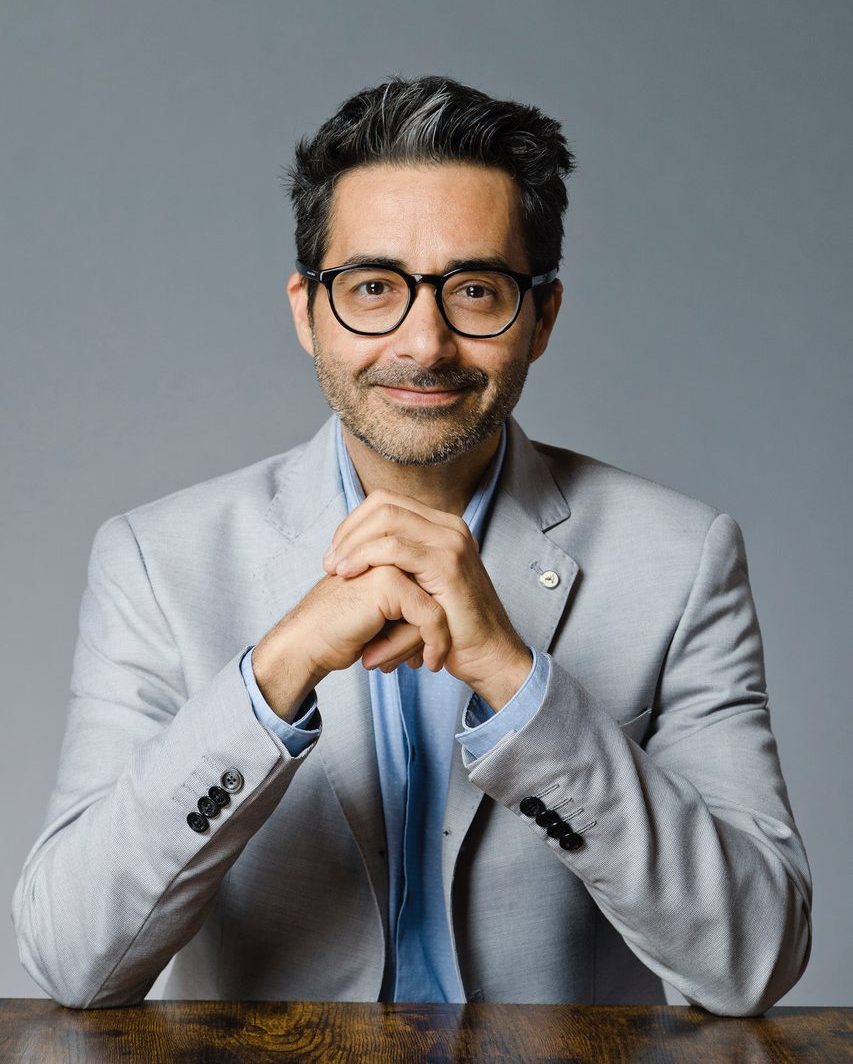
Dr. Giuseppe Iaria
Professor of Cognitive Neuroscience, University of Calgary
Giuseppe Iaria, PhD is Professor of Cognitive Neuroscience at the University of Calgary (Calgary, Alberta, Canada), with appointments in the Department of Psychology, the Hotchkiss Brain Institute, and the Alberta Children’s Hospital Research Institute. He is an internationally recognized leader in human spatial cognition and space health research, with over two decades of contributions spanning basic neuroscience, clinical translation, and astronaut health. Dr. Iaria is a pioneer in investigating the Read More
Space Health
Session Speakers Info
Michela Cutigni
Aerospace Engineer, Sapienza University of Rome/Thales Alenia Space
Michela is a PhD researcher in Space Biomedicine at Sapienza University of Rome’s National Space Biomedicine Laboratory, in collaboration with Thales Alenia Space. Trained as a Space and Astronautical Engineer (MSc, Sapienza), Michela works at the intersection of space systems and life sciences, studying how microgravity and spaceflight stressors impact human health, with a focus on cancer and female reproductive biology. Michaela has represented their lab at IAC 2024, authored Read More
Joannes Paulus Tolentino Hernandez
Associate Professor of Nursing, Helene Fuld College of Nursing
Dr. Joannes Paulus Tolentino Hernandez is a Filipino-American nurse helping pioneer aerospace nursing. His research bridges nursing, communication, biology, and aerospace physiology to protect human health in space. He is an Associate Professor of Nursing at Helene Fuld College of Nursing in New York (2023 to present) and received the 2024 Provost Faculty Leadership Award and the 2022 Vicente Teves Locsin, Jr. Research and Scholarship in Nursing Award. He founded Read More
Haig John
Doctor of Chiropractic, Board of Directors, Odyssey Charter School
Dr. Haig John is in private practice in Melbourne Florida and the founder of Your Family Chiropractor & Families First Physicians. He is an international speaker, educator and the developer of the INNATE Chiropractic Adjusting Workshop Series which includes zero gravity adjusting for off-Earth chiropractic training for long and short term space travel, INNATE Newborn Adjusting and Subluxation Analysis, and Anchor Release Method – a technique to release tension on Read More
Varadaraya Shenoy
Acting Instructor & Cerebrovascular Fellow, Neurological Surgery, UW Seattle
Dr. Varadaraya Shenoy is an Acting Instructor in the Department of Neurosurgery at the University of Washington, Seattle. He earned his medical degree from Rajiv Gandhi Medical College, Thane, India, and completed neurosurgery fellowships at Kohnan Hospital, Sendai, Japan, and the University of Washington. His research spans cerebrovascular neurosurgery, AI-driven outcome prediction, and space medicine. He has led multidisciplinary projects funded by NIH, WFNS, EANS, and NSF, resulting in novel Read More


